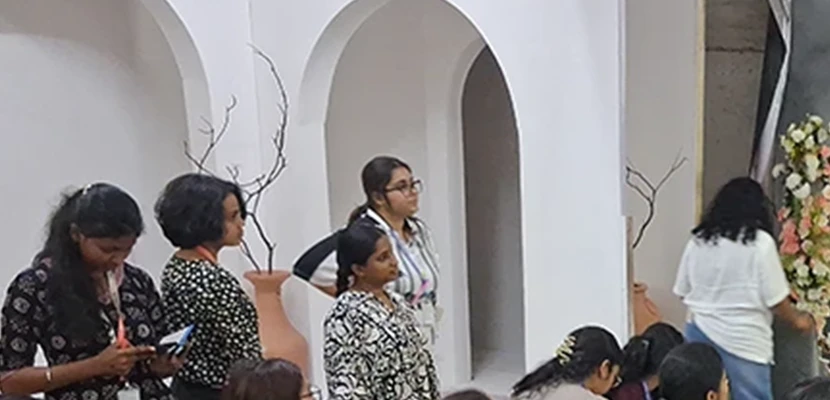
Set Design Course in Mumbai Learn to Transform Spaces into Visual Experiences
2026-10-13Set Design Course in Mumbai: Learn to Transform Spaces into Visual Experiences
A stage is more than a platform for a performance. A film location is more than a background. An exhibition is more than a collection of objects. The environment surrounding a story, performance, product, or event can influence how audiences understand and experience it.
This is where set design becomes important.
Set designers use creativity, spatial thinking, materials, planning, and visual communication to transform an empty space into an environment that supports a particular concept or purpose. From stage productions and entertainment spaces to events and visual presentations, set design brings together artistic imagination and practical execution.
For students interested in this creative field, Aditya College of Design Studies (ACDS), Mumbai, offers a Set and Stage Design Course designed to introduce learners to the fundamentals of set creation, including design elements, estimating and costing, model making, set designing, and practical training. The official course page lists the programme as a one-year course for students who have passed 10th standard.
What Is Set Design?
Set design is the process of creating and planning environments for performances, productions, events, exhibitions, and other visual experiences.
A set designer may need to consider:
- Space and dimensions
- Visual composition
- Materials
- Colours and textures
- Scale and proportion
- Audience perspective
- Functionality
- Budget
- Construction requirements
- Installation and execution
The final design needs to work both visually and practically.
A beautiful concept may not be useful if it cannot be constructed within the available space or budget. This is why set design combines creative thinking with technical planning.
Why Set Design Is an Interesting Creative Discipline
Set design is different from many other design fields because every project can have a new visual requirement.
A designer may be asked to develop an environment based on:
- A story
- A theme
- A performance
- A brand
- A cultural concept
- A historical period
- A product
- An event
- An exhibition
This variety encourages designers to research, experiment, sketch, build models, select materials, and develop new visual solutions.
For students who enjoy both art and spatial design, set design can provide an opportunity to explore a multidisciplinary creative field.
Set and Stage Design at ACDS
The official ACDS course page describes the programme as a Set and Stage Design Course. It focuses on elements of design, estimating and costing, model making, set designing, and practical training.
Course Snapshot
|
Course |
Details |
|
Programme |
Set and Stage Design |
|
Duration |
1 year |
|
Eligibility |
10th pass |
|
Key Areas |
Design elements, estimating & costing, model making, set design |
|
Learning Approach |
Practical training |
These components provide an introduction to both the creative and practical sides of set development.
Understanding the Elements of Design
Before creating a complete set, designers need to understand fundamental visual principles.
Elements such as:
- Line
- Shape
- Form
- Colour
- Texture
- Space
- Scale
- Proportion
can influence the appearance and atmosphere of an environment.
For example, colour can establish mood, while scale can influence how large or intimate a space feels. Texture can add visual depth, while lighting can change how colours and forms are perceived.
Understanding these fundamentals can help students develop stronger design concepts.
From an Idea to a Set
Set design usually begins with an idea rather than a finished structure.
A simplified process might look like:
Concept → Research → Sketches → Space Planning → Model → Costing → Refinement → Execution
The process may change depending on the type of project, but the principle remains the same: the designer develops an idea and gradually translates it into something that can be visualised and eventually built.
This is why set design education needs to address both imagination and execution.
The Role of Model Making
One of the distinctive aspects of set design is the use of models.
A model can provide a three-dimensional representation of a proposed environment before the final set is constructed.
Students can use models to explore:
- Scale
- Proportion
- Spatial relationships
- Furniture placement
- Structural elements
- Visual composition
- Materials
- Audience viewpoints
Model making can also help designers identify problems early in the design process.
A small-scale model can therefore become an important communication tool between the designer and other people involved in a project.
Why Estimating and Costing Matter
Creative ideas need to work within practical limitations.
Every physical set involves resources. Materials, construction, transportation, labour, installation, modification, and other requirements can affect the overall cost.
Learning estimating and costing, which is specifically included in the ACDS course description, can help students understand the practical side of design.
A designer may need to ask:
- What materials are required?
- How much material will be needed?
- Can the design be constructed within the available budget?
- Which elements are essential?
- Where can resources be used efficiently?
- How can the design be modified without losing its central concept?
This connection between creativity and budgeting is an important part of professional design work.
Practical Training and Learning by Doing
Set design is a hands-on discipline.
Students can understand spatial concepts through actual experimentation with materials, models, drawings, and design projects.
The ACDS course specifically includes practical training as part of the programme.
Practical learning can help students understand the difference between an idea on paper and an idea that can actually be executed.
For example, a concept may look excellent in a sketch but require changes after considering structural stability, material availability, measurements, or budget.
Developing Spatial Thinking
Set designers need to think in three dimensions.
Instead of looking only at a flat drawing, they need to imagine how people will move through and experience the environment.
Spatial thinking can involve understanding:
- Height
- Width
- Depth
- Movement
- Visibility
- Perspective
- Proportion
- Relationships between objects
Developing this ability can help students create environments that are visually balanced and practically usable.
Set Design and Storytelling
A set can communicate information before a character says a single word.
The design of a space can suggest:
- Time period
- Location
- Social environment
- Mood
- Character
- Function
- Theme
Consider a few examples:
A minimalist space may suggest simplicity or modernity.
An old, textured environment may communicate history or age.
A brightly coloured set may create an energetic atmosphere.
A carefully designed corporate environment can reinforce a brand's identity.
This is why set design can be viewed as a form of visual storytelling.
Areas Where Set Designers Can Work
Set design skills can potentially be applied across a variety of creative industries.
Depending on their training and professional experience, designers may explore work related to:
Film and Television
Set designers can contribute to environments created for screen productions.
Theatre
Stage environments help establish the setting and atmosphere of live performances.
Events
Corporate events, launches, exhibitions, cultural programmes, and celebrations can require specially designed environments.
Exhibitions
Exhibition design involves arranging spaces and displays so that visitors can navigate and understand the content.
Fashion Events
Runways, presentations, and fashion-related productions can use specially designed environments to support their visual identity.
Brand Activations
Companies may create temporary environments to introduce products or engage audiences.
The specific role and responsibilities can vary according to the project and organisation.
Career Opportunities After Set Design
Students developing skills in set and stage design may explore professional roles such as:
- Set Designer
- Stage Designer
- Set Design Assistant
- Art Department Assistant
- Production Design Assistant
- Exhibition Designer
- Event Set Designer
- Spatial Designer
- Model Maker
- Design Coordinator
Career development can depend on portfolio quality, practical skills, networking, project experience, and the ability to work collaboratively.
Building a Set Design Portfolio
A portfolio can be especially useful for students entering a creative profession.
Instead of displaying only completed projects, an effective portfolio can demonstrate the entire design process.
A student portfolio could include:
|
Portfolio Section |
Purpose |
|
Concept Sketches |
Shows initial ideas |
|
Research |
Demonstrates conceptual development |
|
Floor Plans |
Shows spatial planning |
|
Elevations |
Demonstrates technical understanding |
|
Scale Models |
Shows three-dimensional thinking |
|
Material Studies |
Demonstrates experimentation |
|
Costing |
Shows practical awareness |
|
Final Visuals |
Presents the completed concept |
Showing how an idea developed can help demonstrate problem-solving and design thinking.
Skills That Can Strengthen a Set Designer's Career
Creativity
Set designers need to generate original concepts and adapt ideas to different themes.
Drawing
Sketching can help communicate ideas quickly during the development process.
Spatial Awareness
Understanding three-dimensional relationships is essential for designing environments.
Material Knowledge
Knowing how different materials behave can support more practical design decisions.
Budget Awareness
Designs need to account for available resources.
Collaboration
Set projects can involve designers, technicians, production teams, artists, contractors, and clients.
Adaptability
Creative projects can change during development, requiring designers to respond to new requirements.
Why Study Set Design in Mumbai?
Mumbai provides a particularly interesting environment for students interested in creative and entertainment-related disciplines.
The city has strong connections with film, television, theatre, advertising, events, fashion, media, and other creative industries.
Studying set design in such an environment can expose students to a city where visual production and spatial experiences form part of everyday professional activity.
ACDS is located at Aditya Educational Campus, R. M. Bhattad Road, Ram Nagar, Borivali (West), Mumbai 400 092.
Who Should Consider a Set Design Course?
Set design may be worth exploring if you:
- Enjoy films, theatre, or events
- Like drawing and sketching
- Have an interest in spaces and environments
- Enjoy building models or physical objects
- Like visual storytelling
- Are curious about materials
- Enjoy creative problem-solving
- Want to combine art with practical design
- Are interested in entertainment or event production
A strong interest in creative experimentation can be a useful starting point. Technical and practical skills can be developed through structured learning and consistent practice.
Turning Empty Spaces into Meaningful Environments
The most interesting part of set design is the transformation that takes place.
An empty room, stage, or production area can become a palace, studio, marketplace, futuristic environment, exhibition, concert space, or themed experience.
Behind that transformation is a process involving research, imagination, planning, drawing, modelling, costing, material selection, and execution.
This makes set design much more than decoration. It is a structured creative discipline in which visual ideas must ultimately work in physical space.
Conclusion
Set design combines art, spatial thinking, storytelling, model making, planning, and practical execution. It offers creative students an opportunity to work on environments that support films, performances, events, exhibitions, and other visual experiences.
The Set and Stage Design Course at Aditya College of Design Studies is currently listed as a one-year programme for students who have passed 10th standard, with course content covering elements of design, estimating and costing, model making, set designing, and practical training.
For students who enjoy transforming ideas into physical spaces, developing a strong foundation in set design can be a valuable first step toward exploring the wider creative and production industries.